Many of the arguments for limiting trans rights are put forward in the name of protecting women's spaces. Since the Supreme Court ruling in 2025, and the EHRC guidance that followed it, that argument now decides how toilets and changing rooms are run across the UK. So it's worth looking at it properly.
The basic argument goes like this: men are violent; a trans woman is, in their eyes, a man; therefore, a trans woman is a risk to women and shouldn't be allowed into their spaces. Notice what this assumes: that a trans woman isn't a woman, and that she's dangerous. And it completely ignores trans men.
Where is the evidence?
Let's start with the evidence. If trans women really were a danger in women's spaces, we'd expect to see it in the figures. So where is it? A peer-reviewed study published in 2018 compared areas of Massachusetts with and without trans-inclusive laws. It found no increase in assaults or privacy violations in toilets and changing rooms; in fact, such incidents were extremely rare in both. One study doesn't settle everything, of course; but the burden of proof lies with those who want to exclude people, and they haven't met it.
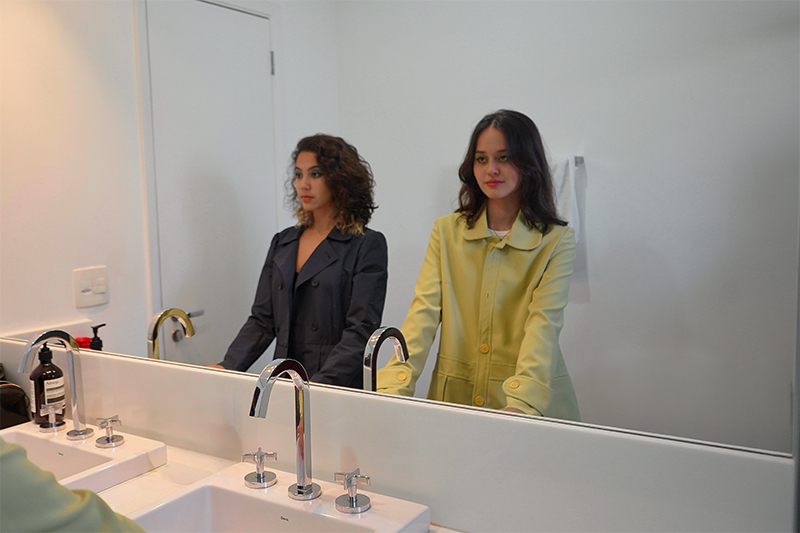
Image posed by models. Photo by Anita Monteiro on Unsplash, edited by Richard's Photography.
Where the real risk lies
However, let's consider violence. Statistically, men are more violent than women; nobody disputes that. But it doesn't mean all men are violent, and you can't predict risk from a category of person rather than from how someone behaves. And when men are violent towards women, the danger rarely comes from a stranger in a public place. Crime Survey figures show that only around one in seven rapes of women was committed by a stranger; most were by partners, ex-partners or someone the victim knew. It's starker still at the most serious end: women killed by men are more likely to be killed by their own sons than by strangers. Jane Monckton Smith's excellent book In Control shows that intimate relationships, not public toilets, are where the gravest risks to women lie.
So if campaigners are genuinely concerned about women's safety, surely that's where their time and energy should go? If they're cautious enough to keep trans women out of a toilet on next to no evidence, then, to be consistent, they'd have far more to say about women's relationships with men. Of course, nobody seriously suggests that, which tells you the standard isn't being applied consistently.
A question of consistency
And the inconsistencies don't stop there. Male cleaners routinely clean women's toilets in shopping centres and motorway services, and hardly anyone bats an eyelid. Meanwhile, a rule based on birth sex sends trans men, many of them bearded and entirely male in appearance, into the women's toilets: the very thing the rule is supposed to prevent.
Bad apples
No group is free of bad actors, and the trans community is no exception. The case most often quoted is Isla Bryson, convicted in 2023 of raping two women. But those crimes were committed before she transitioned, while she was living as a man; so they tell us nothing about trans women in women's spaces. What the case does show is that, once the risk was clear, the answer was to deal with her as an individual.
That's exactly how we treat every other group. Wayne Couzens was a serving police officer when he murdered Sarah Everard; nobody suggested banning men from the police. Harold Shipman was a GP and Beverley Allitt was a nurse; we didn't stop men becoming doctors or women becoming nurses. We deal with the individual, tighten the safeguards and carry on. Trans people deserve the same fairness.
Real concerns, better answers
Some will say the worry isn't trans women at all, but men who might take advantage of an open policy; or simply privacy and dignity, especially for women who've survived assault. Those are real concerns and they deserve respect. But a man who's set on committing an offence isn't going to be stopped by a sign on a door, and assault is a crime wherever it happens. Privacy is far better served by better facilities, such as fully enclosed cubicles, than by shutting one group out.
What it means for trans people
And let's not forget what all this means for trans people themselves. In a 2018 survey, almost half of trans people in Britain said they didn't feel comfortable using public toilets, for fear of discrimination or harassment. That's people planning their day around where they can safely go, or simply staying at home.
So who are we really protecting?
So the question remains: if protecting women really is the goal, why is the concern aimed so narrowly at trans women, a small group with no record of posing any particular threat, while far greater risks are ignored? Safety matters to everyone, trans people included. A policy that genuinely protects women should be built on evidence, applied consistently, and shouldn't make another vulnerable group pay the price.
Sources
- Williams Institute: Gender-identity inclusive nondiscrimination laws in Massachusetts (2018)
- Rape Crisis: Statistics sources, citing ONS Crime Survey victim and perpetrator data
- Femicide Census: 2022 annual report
- Stonewall: LGBT in Britain, Trans Report (2018)
- Lewis Silkin: The new EHRC Code of Practice and single-sex services (August 2026)
- Jane Monckton Smith, In Control: Dangerous Relationships and How They End in Murder (2021)
- Photo by Anita Monteiro on Unsplash